Currently Empty: €0,00
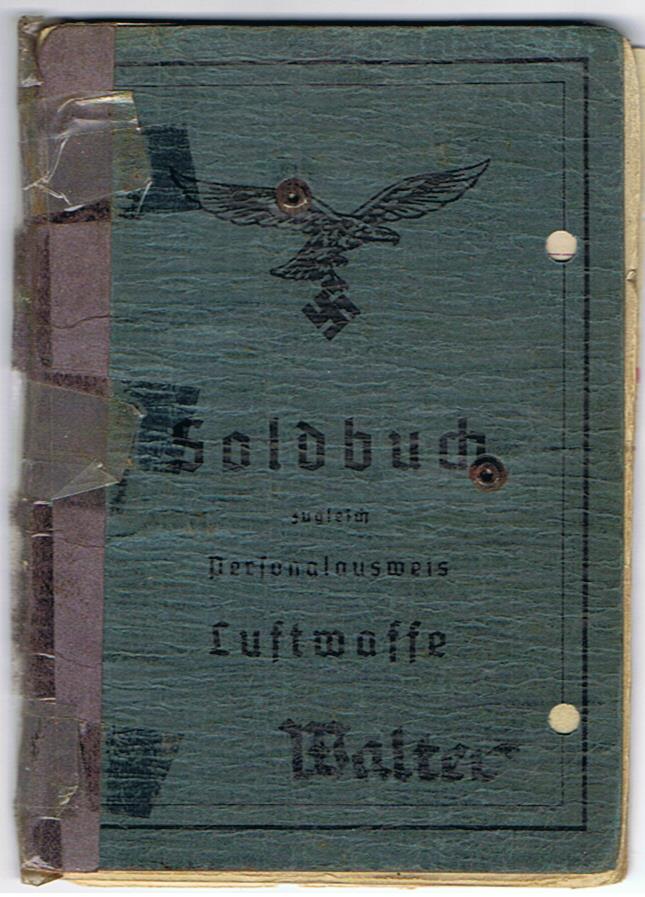
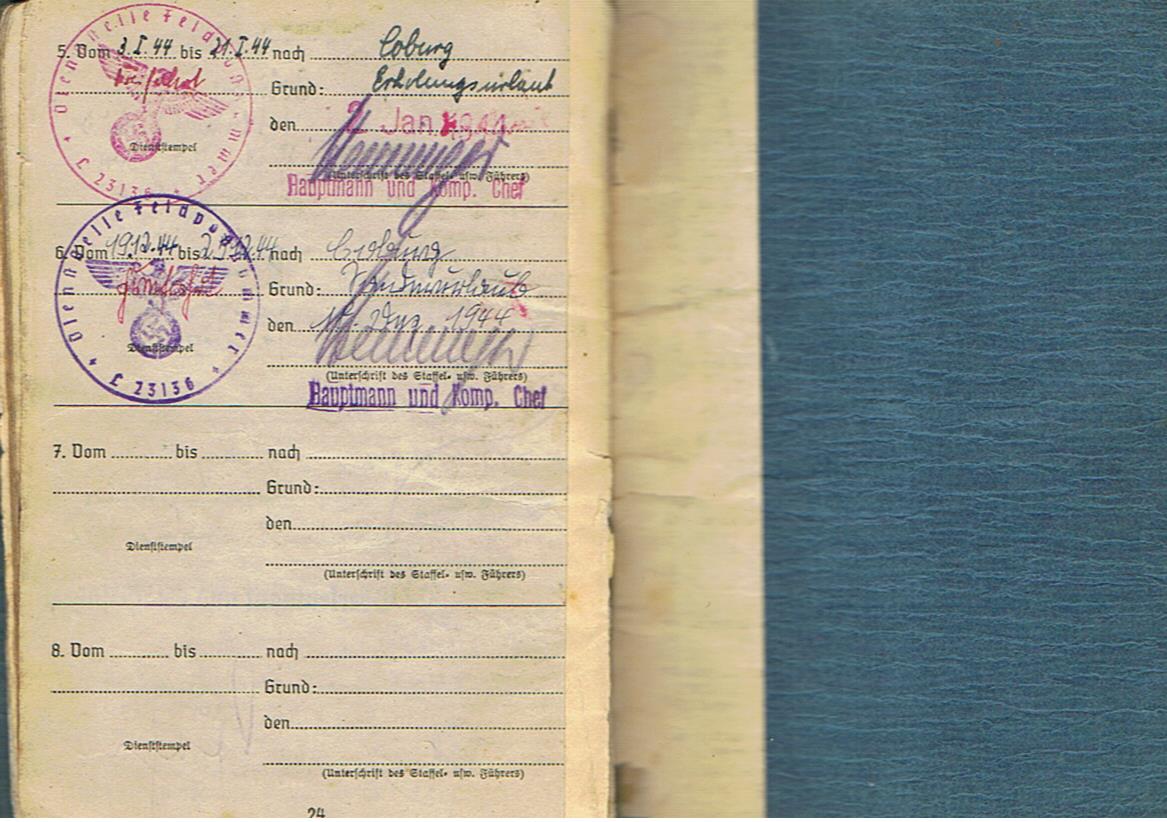
Soldbuch Obergefreiter airfield units KG76 Russia France
€145,00
1 in stock
(D22465)
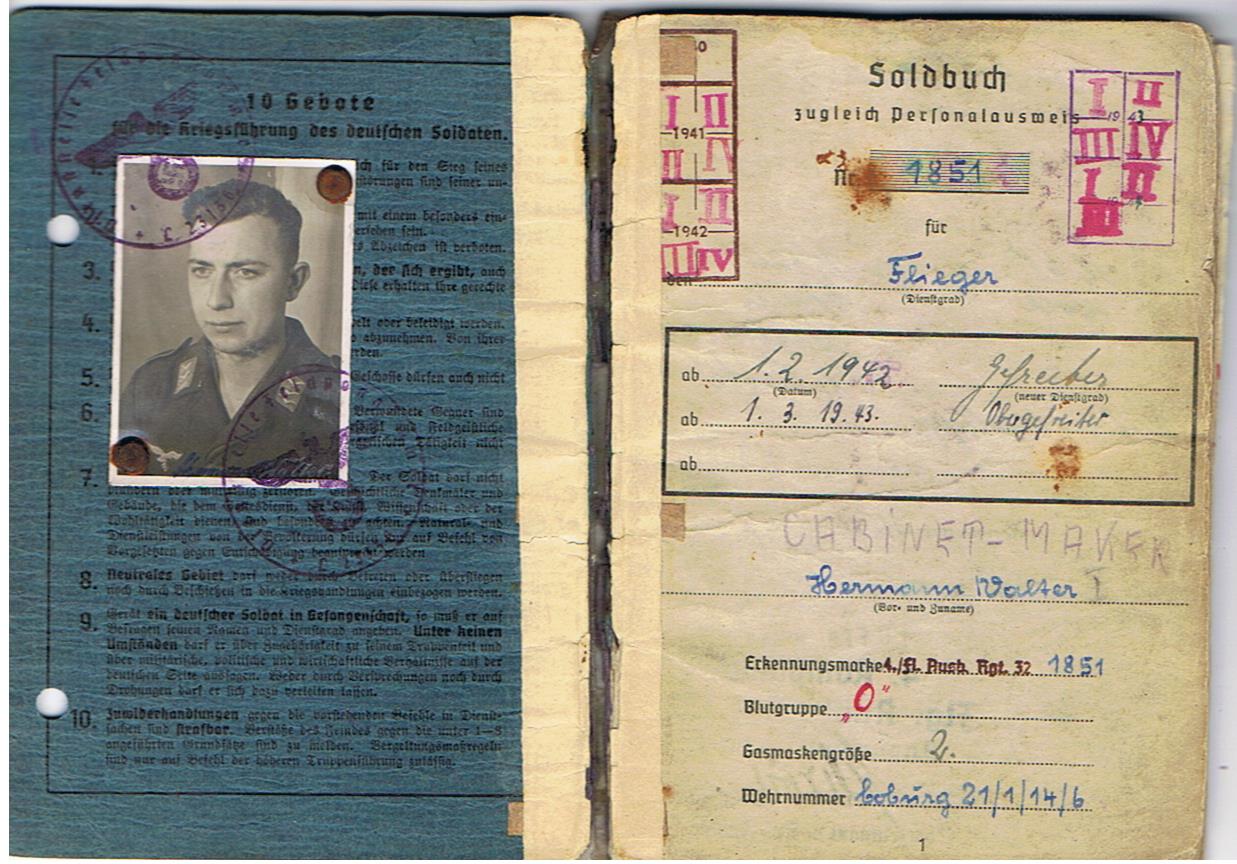
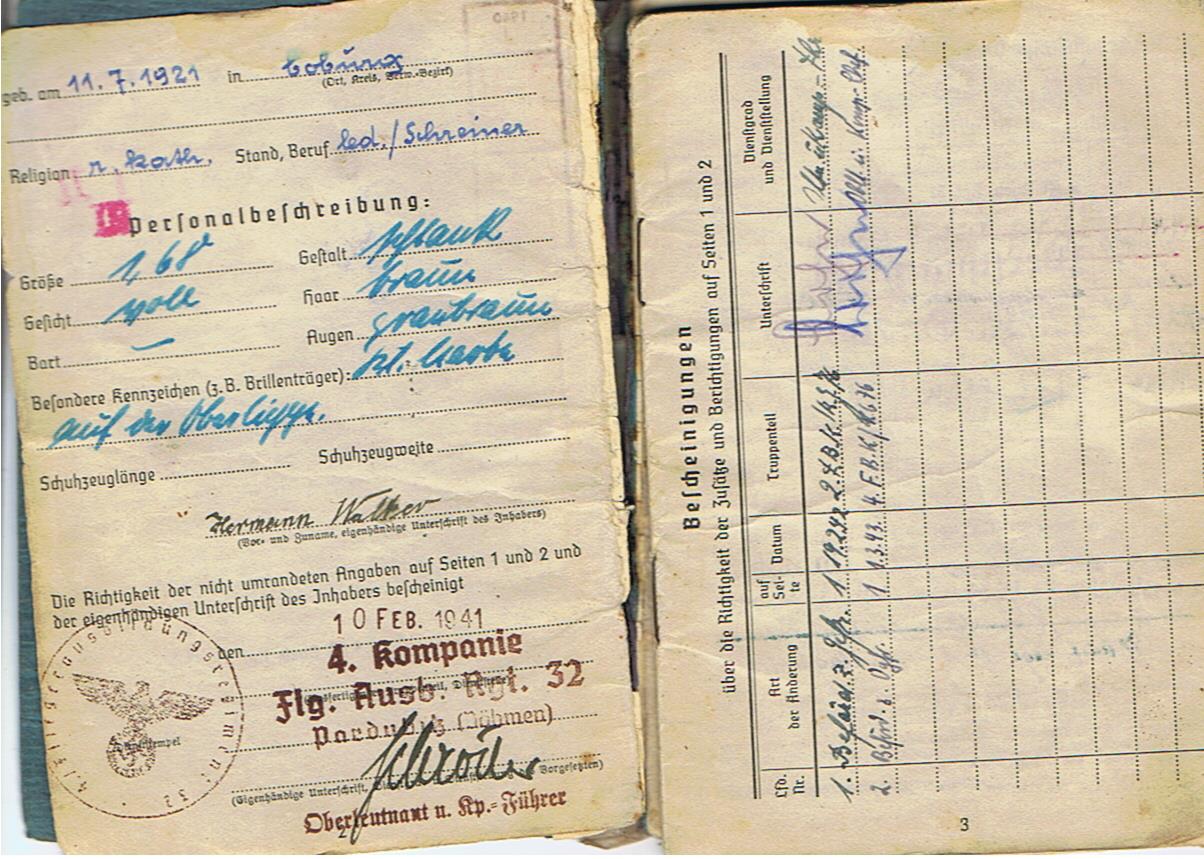
Hermann Walter, Corporal (Obergefreiter) Luftwaffe bomber squadron airfield units
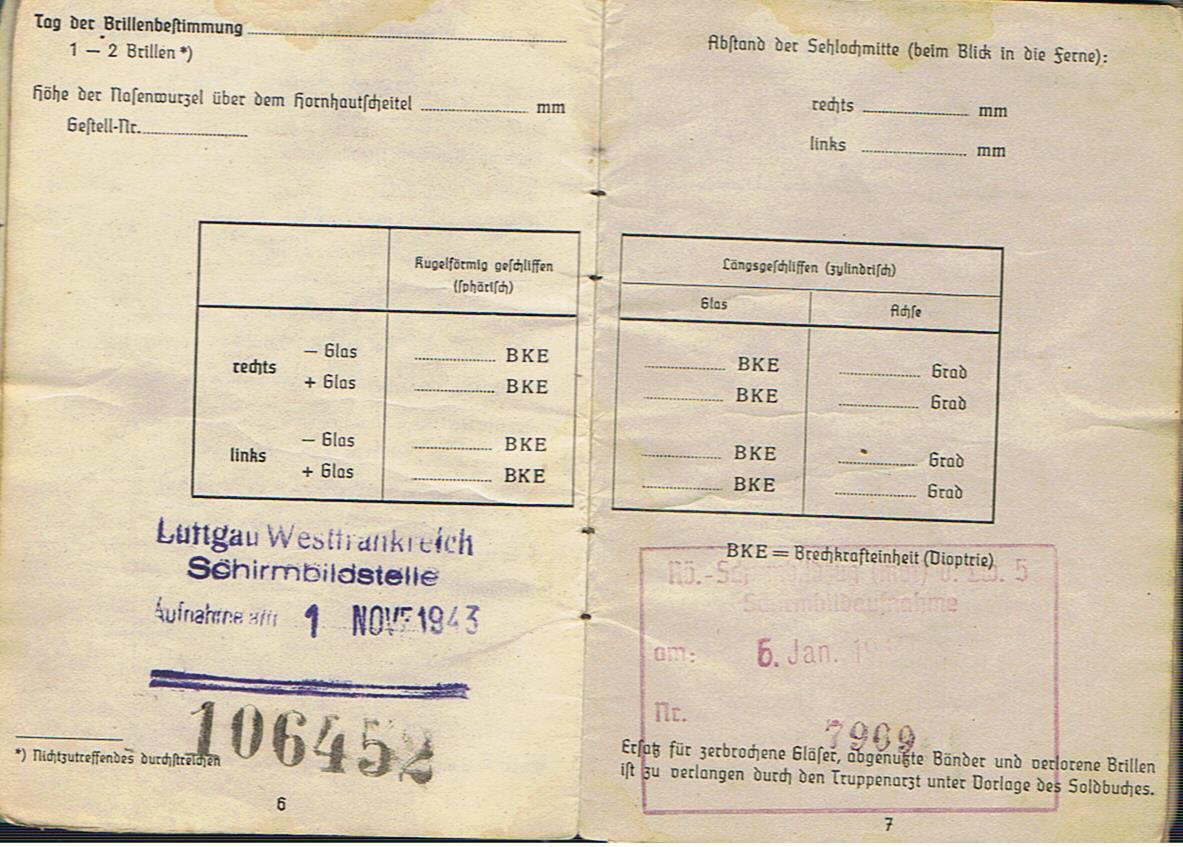
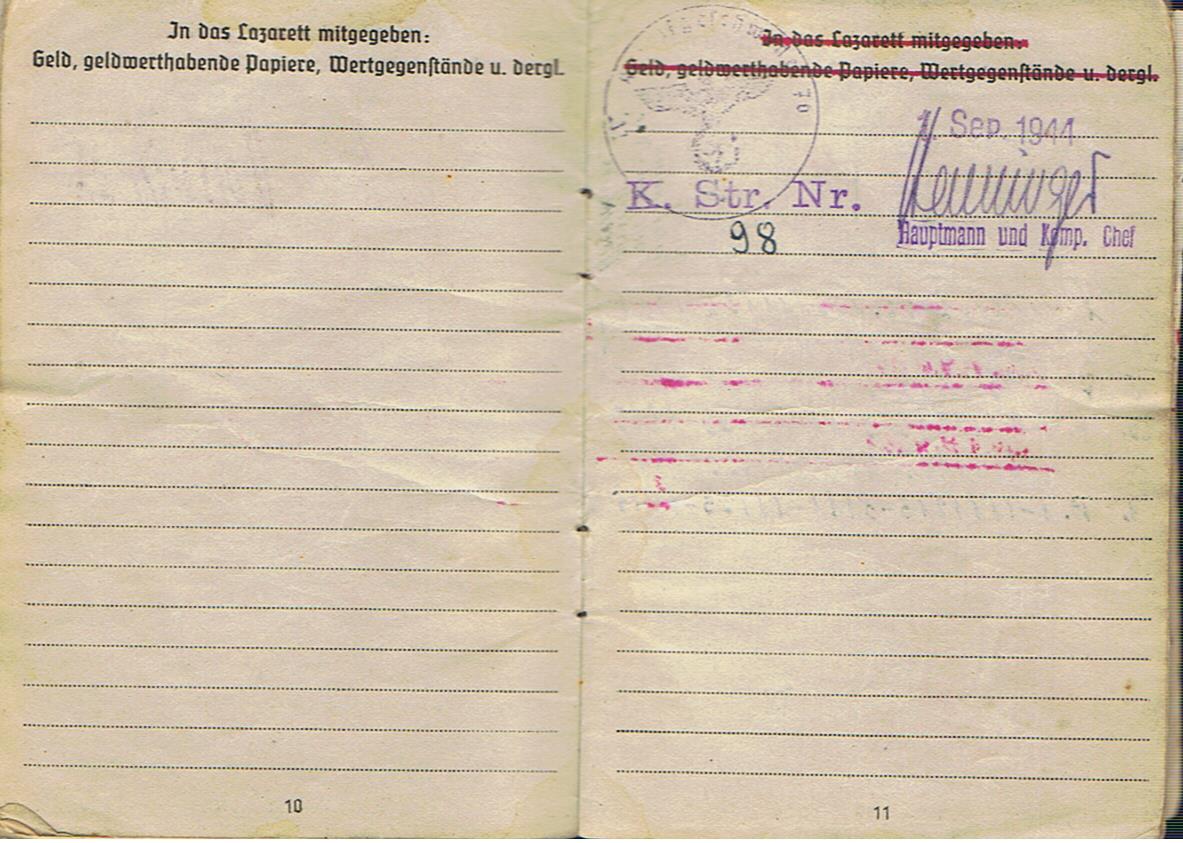
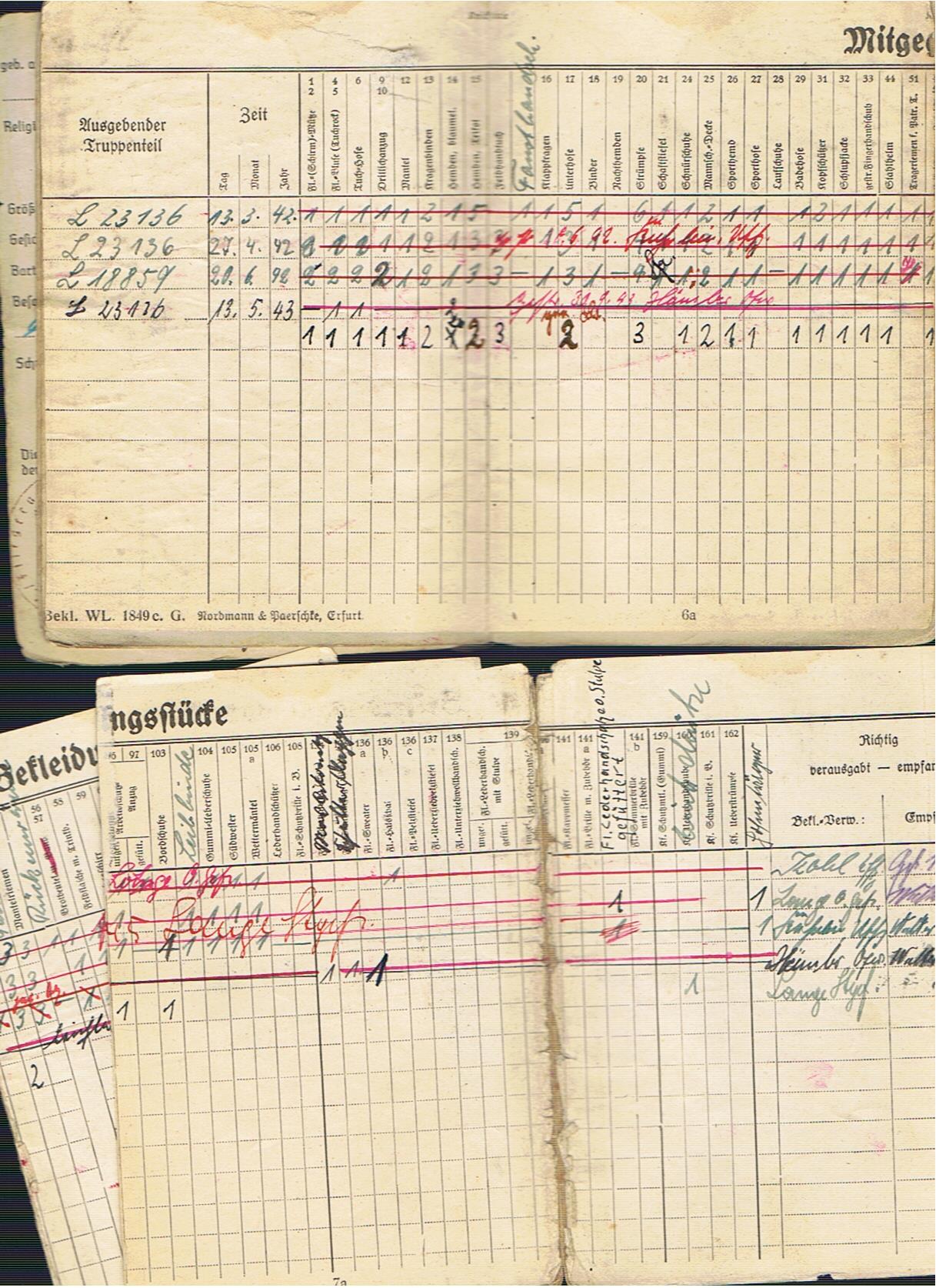
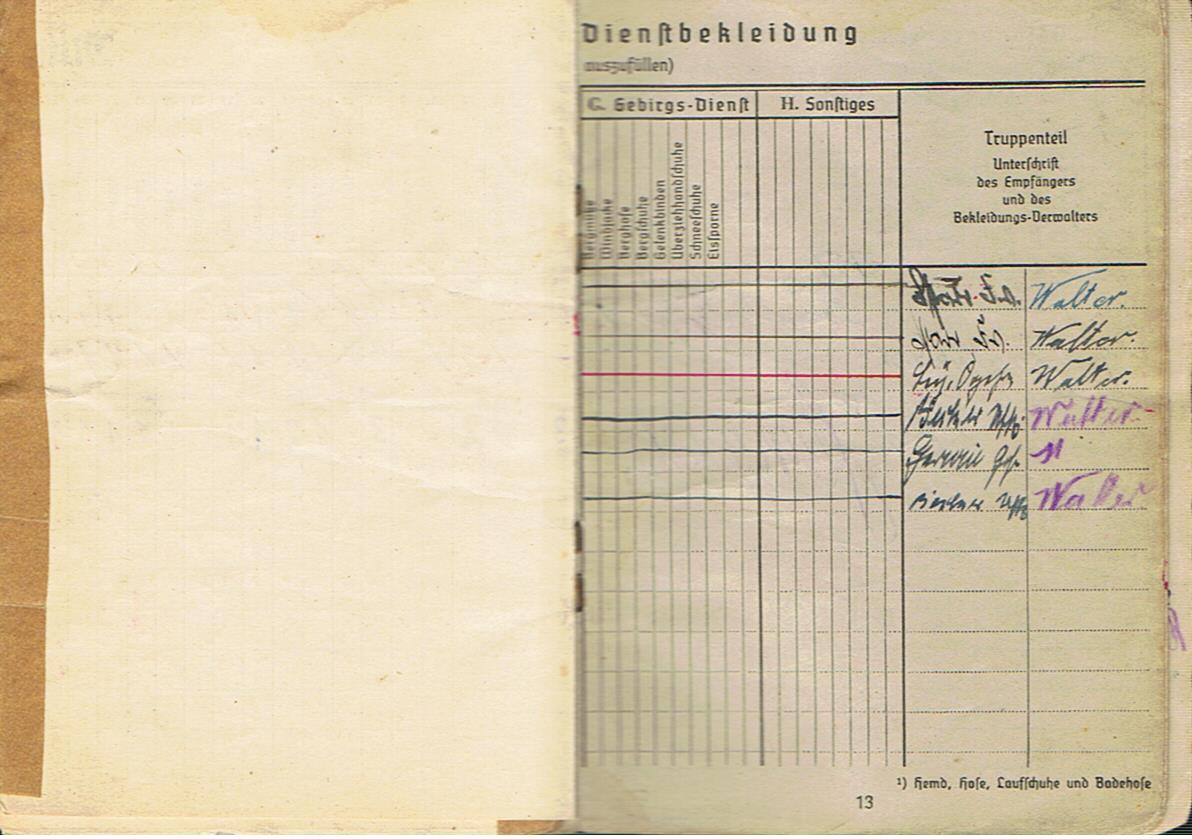
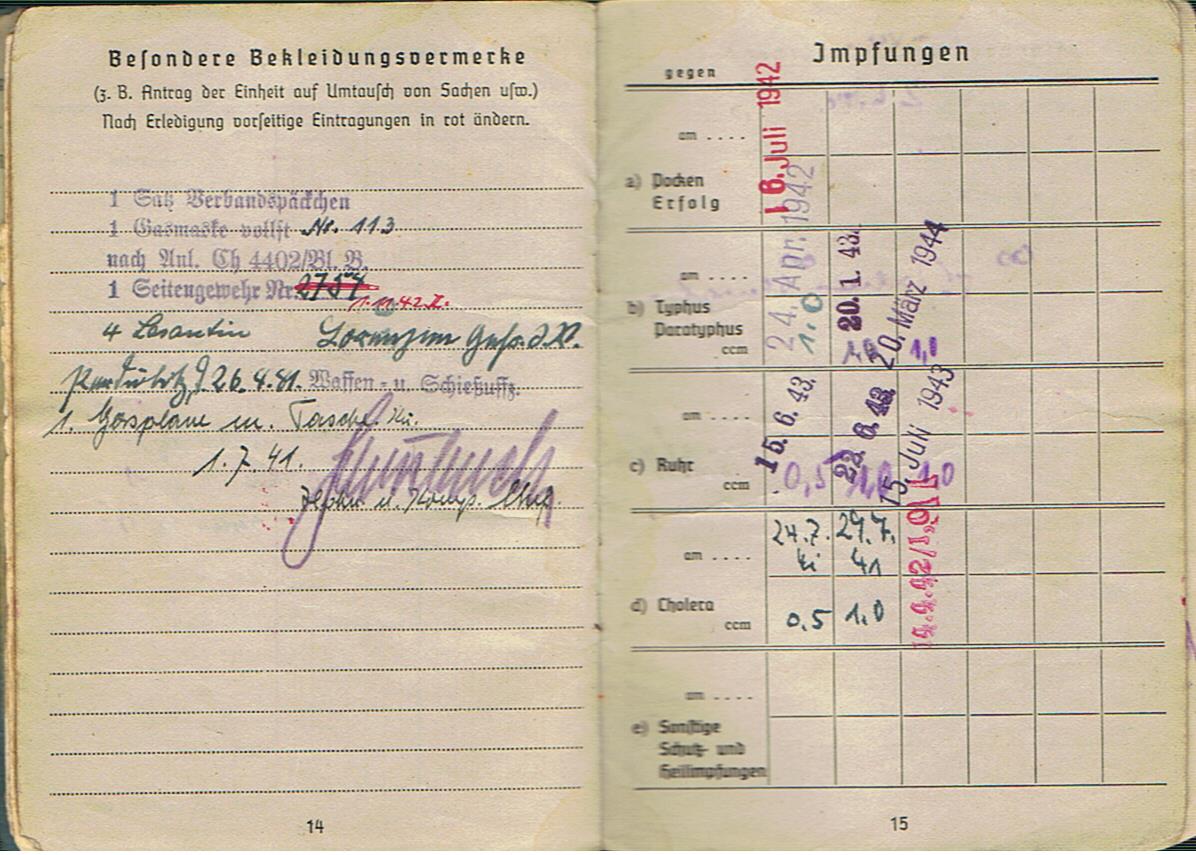
Soldbuch, 10.2.41. With uniform pass photo. Heavily used condition. Loose pages and cover with repairs.
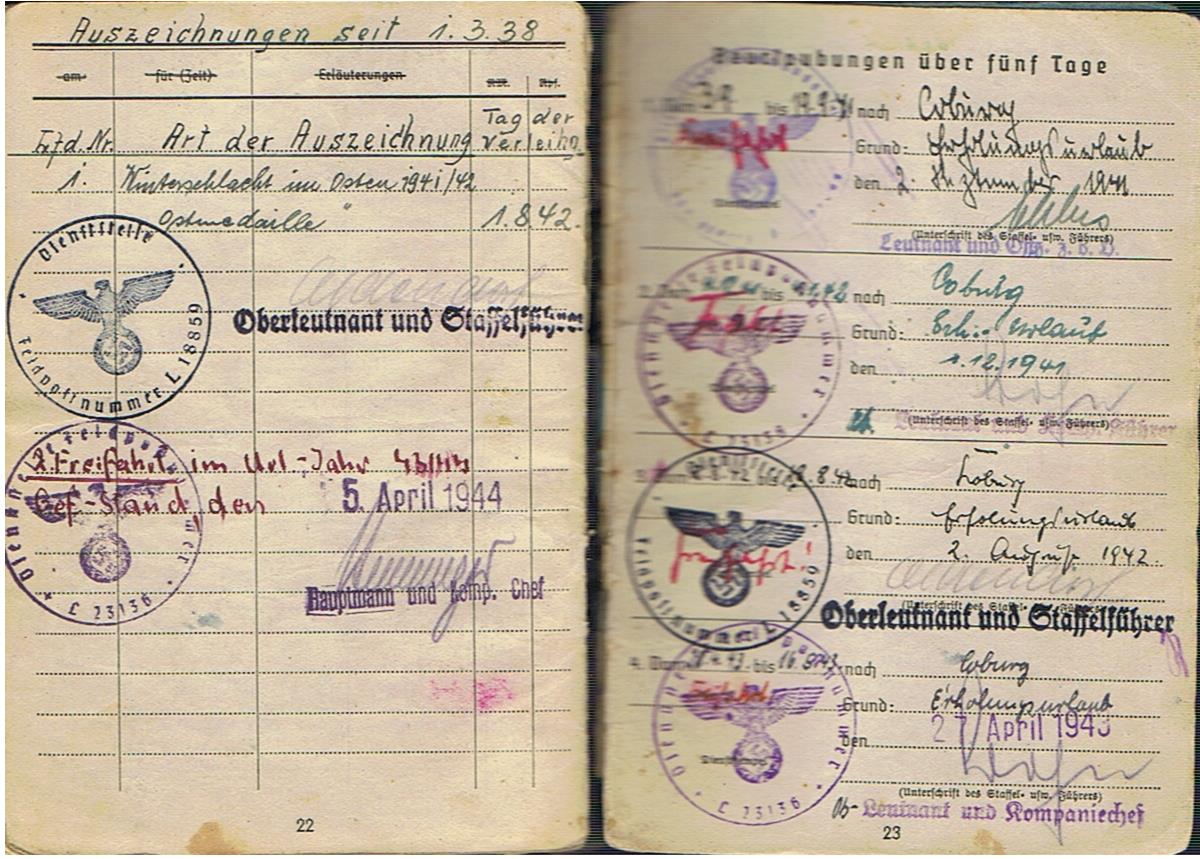
Entitled to: Winter War Medal (1.8.42)
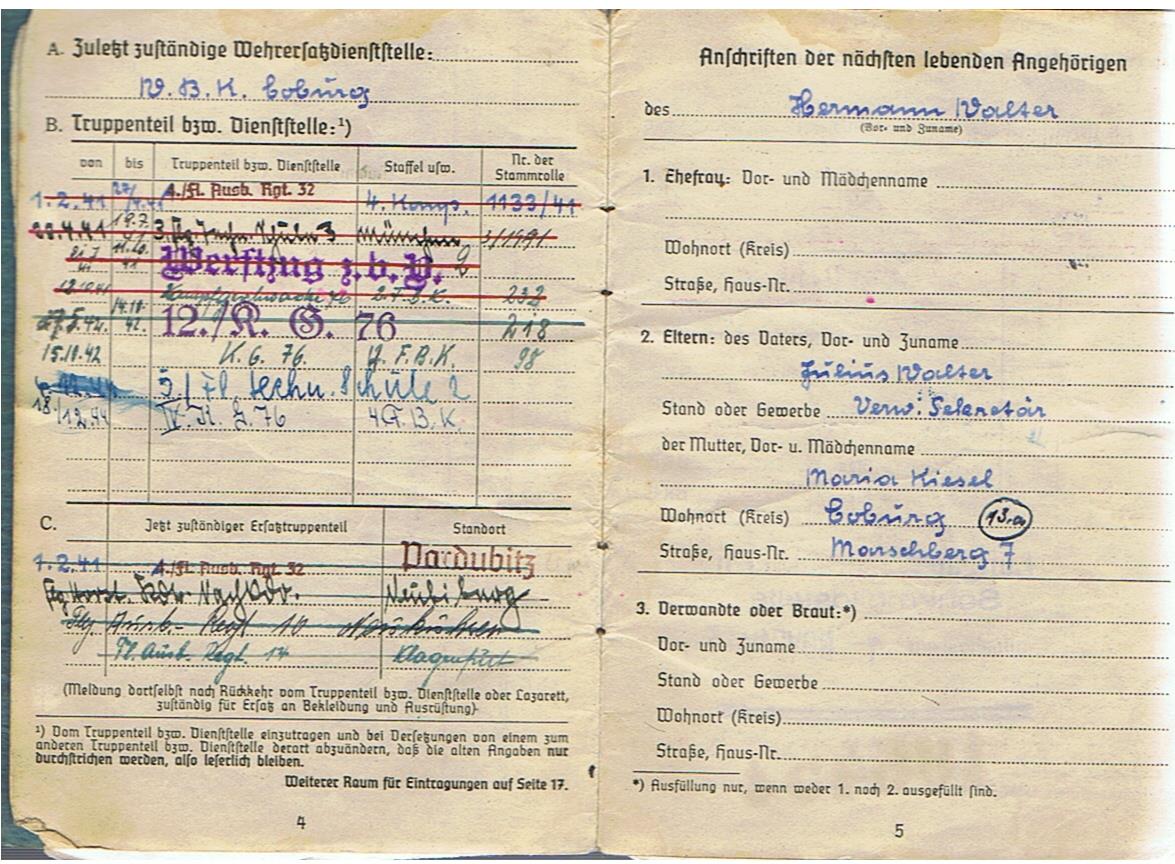
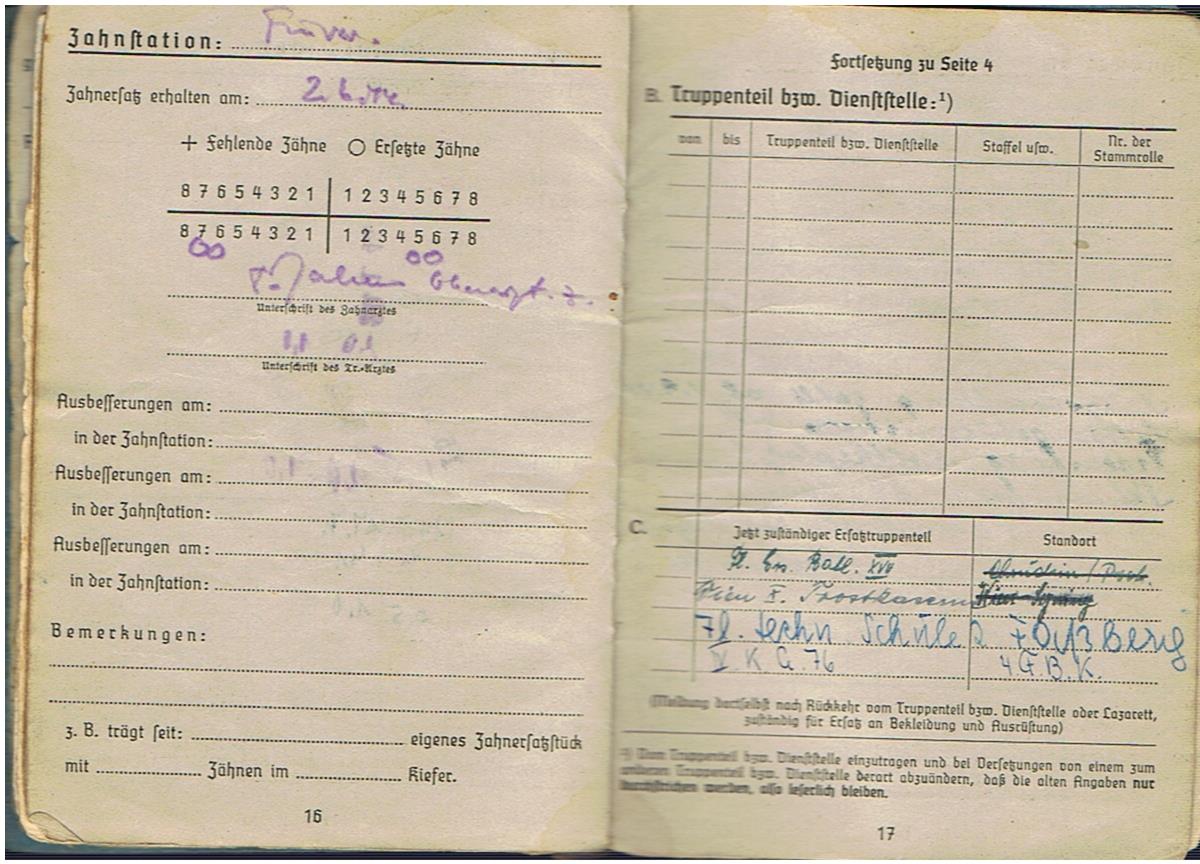
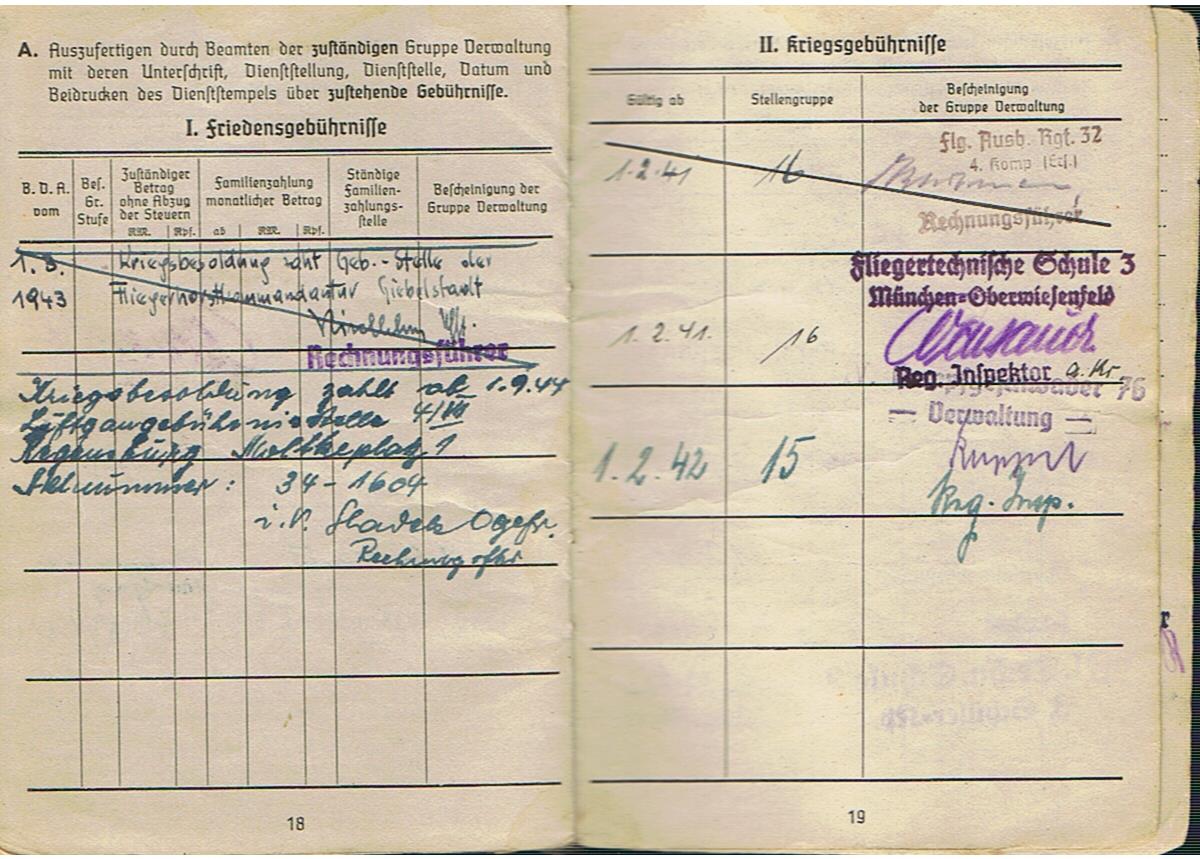
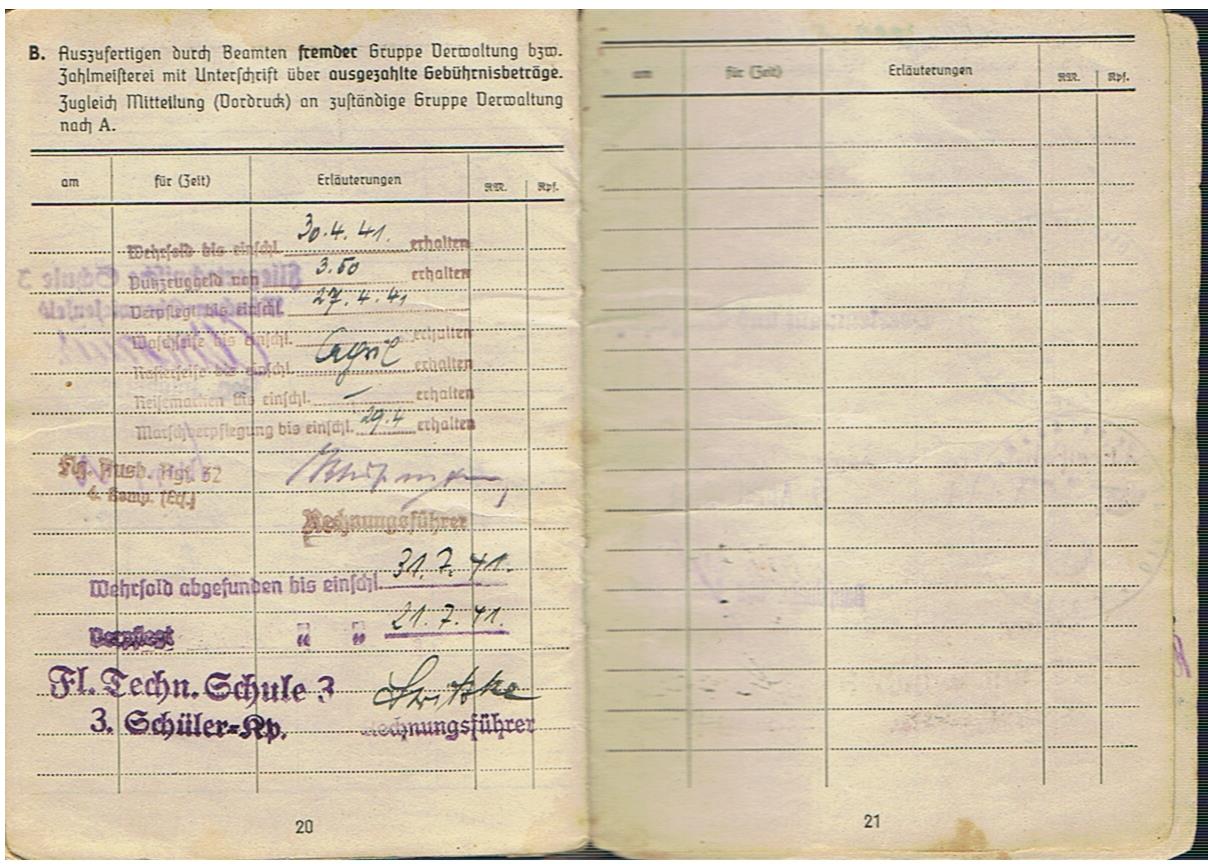
Furniture maker born 1921 in Coburg. He served: Feb.-Apr.41 for basic training with Flieger-Ausbildungs-Regiment 32; Apr.-Jul.41 with Fliegertechnische Schule 3 in München; Jul.-Oct.41 with airfield workshop Werftzug z.b.V. 2; Oct.41-Dec.44 with the airfield unit of bomber squadron (II. and IV./)Kampfgeschwader 76 active till 1942 in Russia, 1942-1944 the Mediterranean and Middle East theatre including Africa, 1943-44 in Italy, 1944 Western front including France, Battle of the Bulge and Remagen; Dec.44 with Fliegertechnische Schule 2 in Fassberg; from Dec.44 onwards again the airfield unit of IV./Kampfgeschwader 76, 1945 active in battles in Germany.
Bases of IV./KG76: 3.41 – 30.9.41 Giebelstadt Germany, 30.9.41 – 11.11.42 Athies-Laon France, 12.11.42 – 5.2.44 Toulouse-Francazals France, 6.2.44 – 8.8.44 Finow Germany, 9.8.44 – 31.12.44 Alt-Lönnewitz Germany
Kampfgeschader 76:
From June 1941 KG 76 supported Army Group North in Operation Barbarossa, the invasion of the Soviet Union. It remained on the Eastern Front until December 1942 and never returned. From December 1942 to January 1944 it operated exclusively the Mediterranean and Middle East theatre, mainly in the Maritime interdiction role. It participated in the Battle of Tunisia, in the final phase of the North African Campaign (November 1942—May 1943) and also in the Italian Campaign, from July 1943 until May 1944. Some of its staffeln converted to the Messerschmitt Me 410 and Junkers Ju 188 in the spring, 1944. The Kampfgeschwader began conversion to the Ar 234 in June 1944. III./KG 76 was the first unit to receive the Ar 234, and received the first two on 26 August. By 1 December 1944 it had 51 of these machines on strength, nearly one-quarter of the entire number of Ar 234 production aircraft to ever be built. III./KG 76 operated over France and the Low Countries until the end of the war. It flew some of the first jet bomber missions in history on 24 December 1944 against rail targets in Namur, Belgium. Troop concentrations were attacked around Liège and Bastogne on 26 and 31 December respectively, in support of German forces during the Battle of the Bulge. The unit also flew reconnaissance missions over Antwerp’s docks and airfields on 1 January 1945 during Operation Bodenplatte. On 20 January 1945 Ar 234s struck the docks at Antwerp, and struck again on 24 January 1945, which was the wing’s last independent mission. Missions were flown against rail targets in the Brussels area on 8 February, and attacked Allied fores around Eindhoven on 21 February.
Related Products