Currently Empty: €0,00
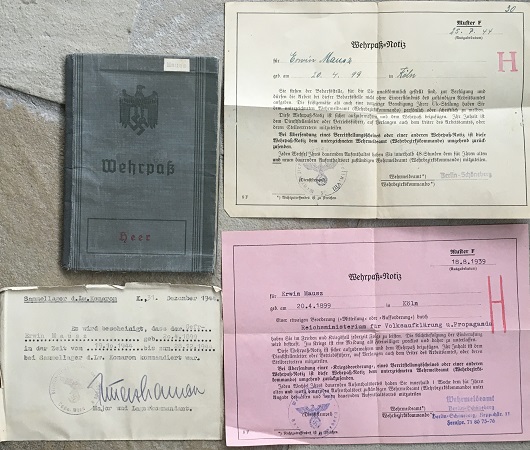
Wehrpass conductor Erwin Mausz ministry Berlin God-gifted list
€245,00
1 in stock
(D22130)
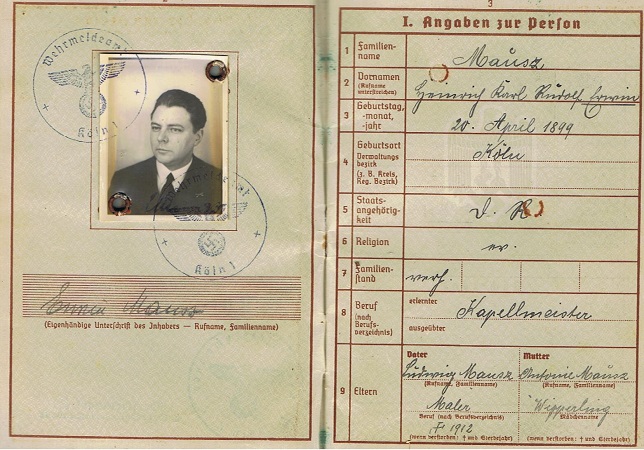
Erwin Mausz, Lance Corporal (Gefreiter) WW1 Infantry, WW2 Reich Ministry Berlin, WW2 Luftwaffe airfield and security units.
1) Wehrpass, 17.6.37.
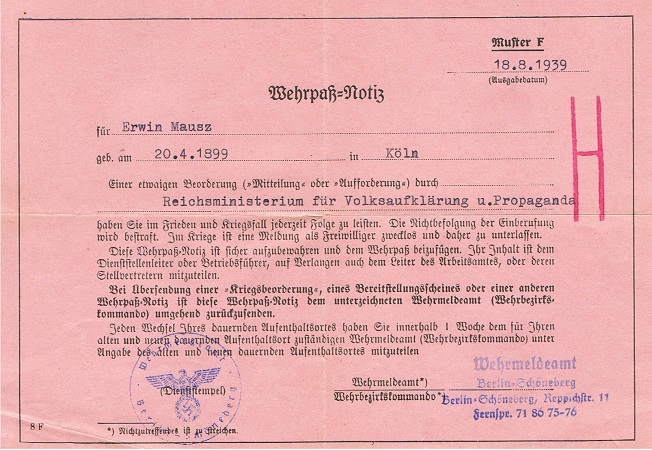
2) Wehrpass-Notitz regarding his UK-Stellung, 18.8.39. Not to be called-up for military service because of his work at the Reichsministerium für Volksaufklärung und Propaganda.
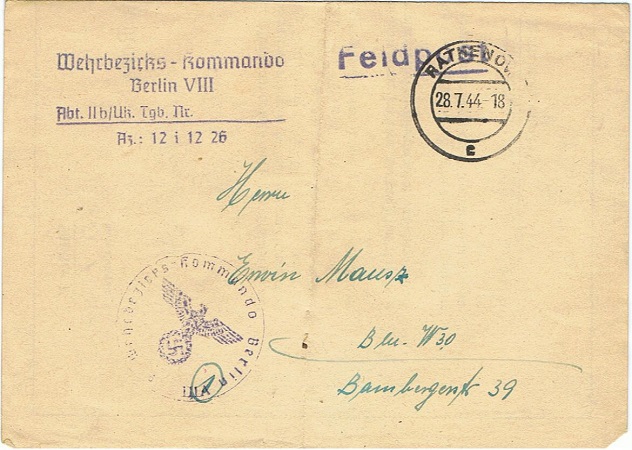
4) Wehrpass-Notitz, 25.7.44. Army district office Berlin-Schöneberg. Stating he can be called-up.
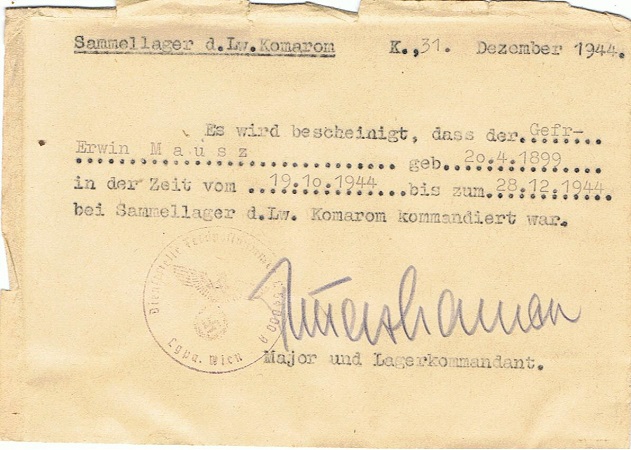
3) Service statement, 31.12.44. Sammellager der Luftwaffe Komarom. Signed by the camp commander, Major.
Entitled to: Hindenburgh Cross for WW1 combatants.
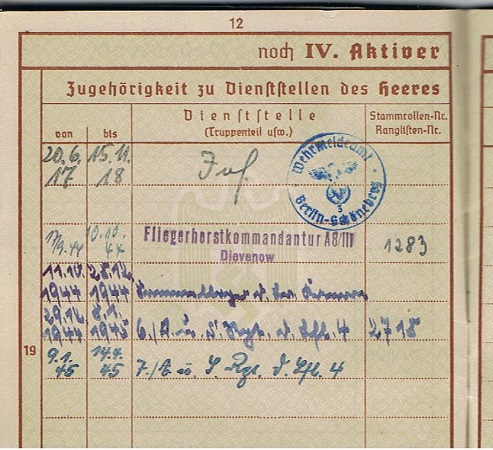
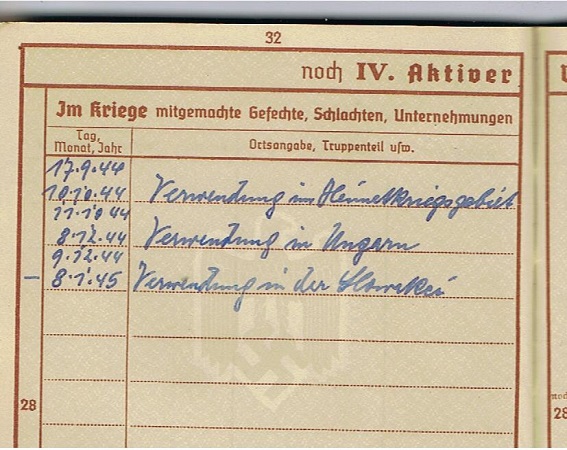
Music conductor „Kapellmeister“ born 1899 in Köln living in Berlin. WW1 service Jun.1917-Nov.1918 with the Infantry. He worked at the Reichsministerium für Volksaufklärung und Propaganda in Berlin, the Reich Ministry of Public Enlightenment and Propaganda, before and during WW2. As can be found on the internet he was composing and conducting music for many films and theater plays etc. during that time. He was also a very important person in Berl;in becuase he was on a special list made by the ministry with appr. 1041 persons, all artists extremely important for the German culture. This was the so called „Sonderliste der unersetzlichen Künstler“ or unofficially known as the „Gottbegnadeten-Liste“ (“God-gifted list” or “Important Artist Exempt List”). It was a 36-page list of artists considered crucial to Nazi culture. The list was assembled in September 1944 by Joseph Goebbels, the head of the Ministry of Public Enlightenment and Propaganda, and Germany’s supreme leader Adolf Hitler. Nevertheless Erwin was called-up for military service the same month the list was created and served: Sep.-Oct.44 with airfield unit Fliegerhorst-Kommandantur A8/III in Dievenow; Oct.-Dec.44 with Sammellager der Luftwaffe Komarom active in Hungary, gathering camp for Luftwaffe personnel without units; from Dec.44 onwards with A.u.S.-Regiment der Luftflotte 4 of Luftwaffe Air Fleet 4, securing the airfields (and also active in ground combat against the approaching Russian Army) in Slovakia and Austria. He died in 1969.
| Weight | 0,05 kg |
|---|
Related Products